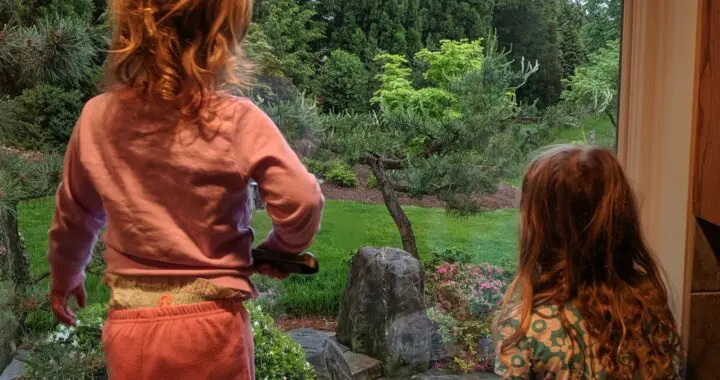
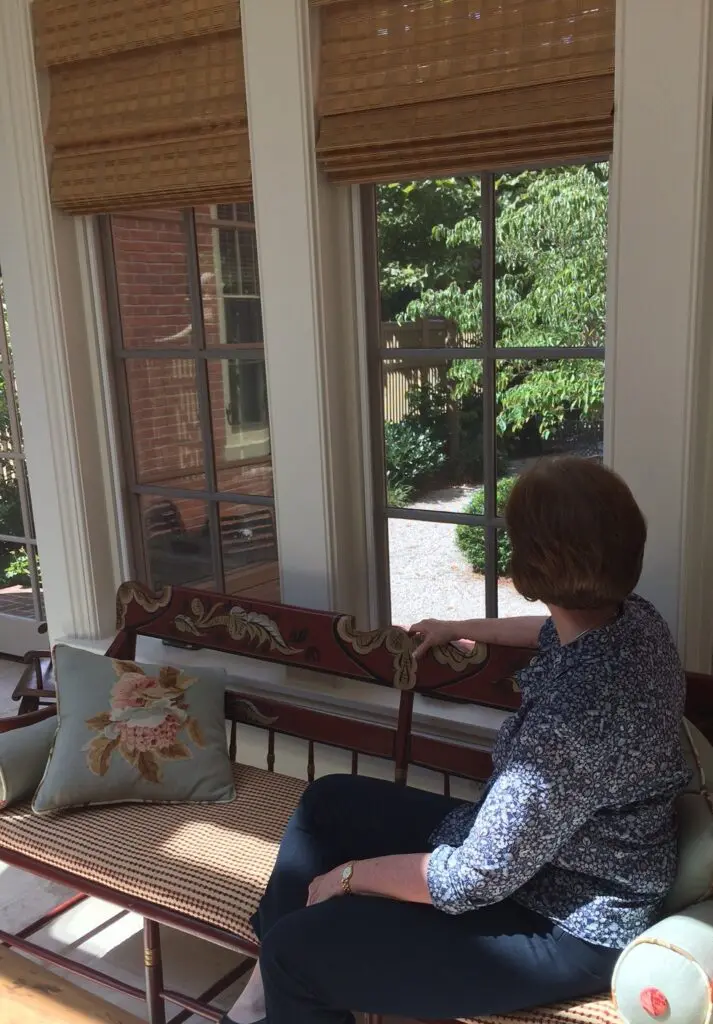
May we treat your windows with a beautiful garden scene and infuse natural beauty and grace into your daily experiences all year ’round? We’d like that and we bet you will, too! Give us a call: 717-653-1273. Bringing joy to your garden is our specialty.
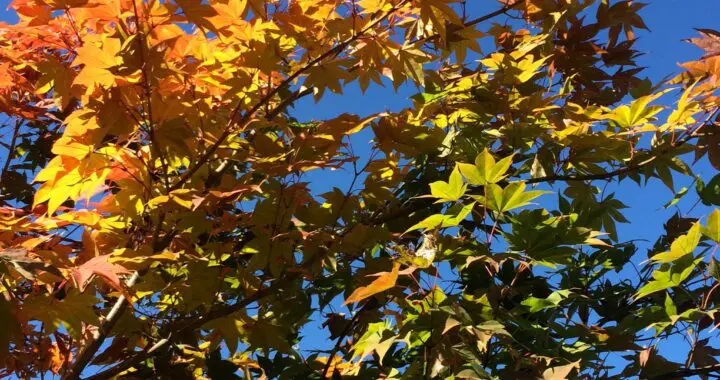
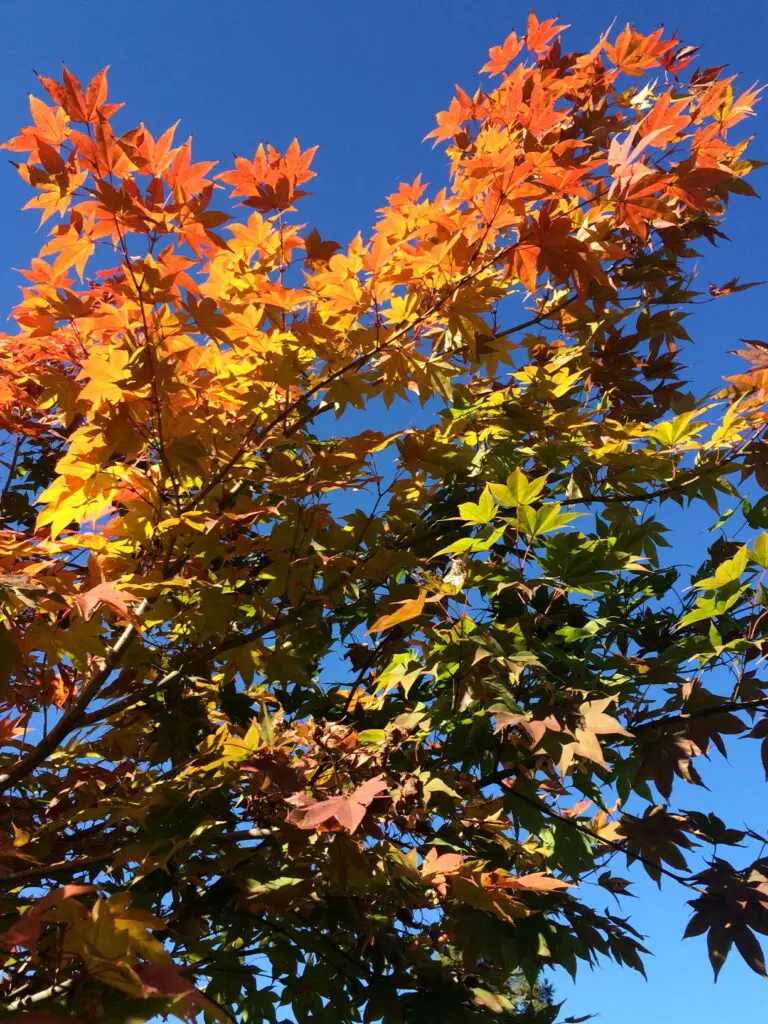
Japanese Maples are probably my favorite trees for many reasons: the innumerable variety of cultivars to choose from; the incredible differences in leaf shapes and bark textures, and–most relevant at this time of year–their glorious autumn display.
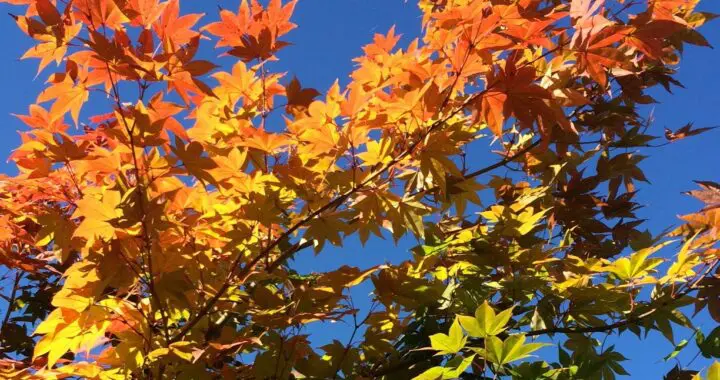
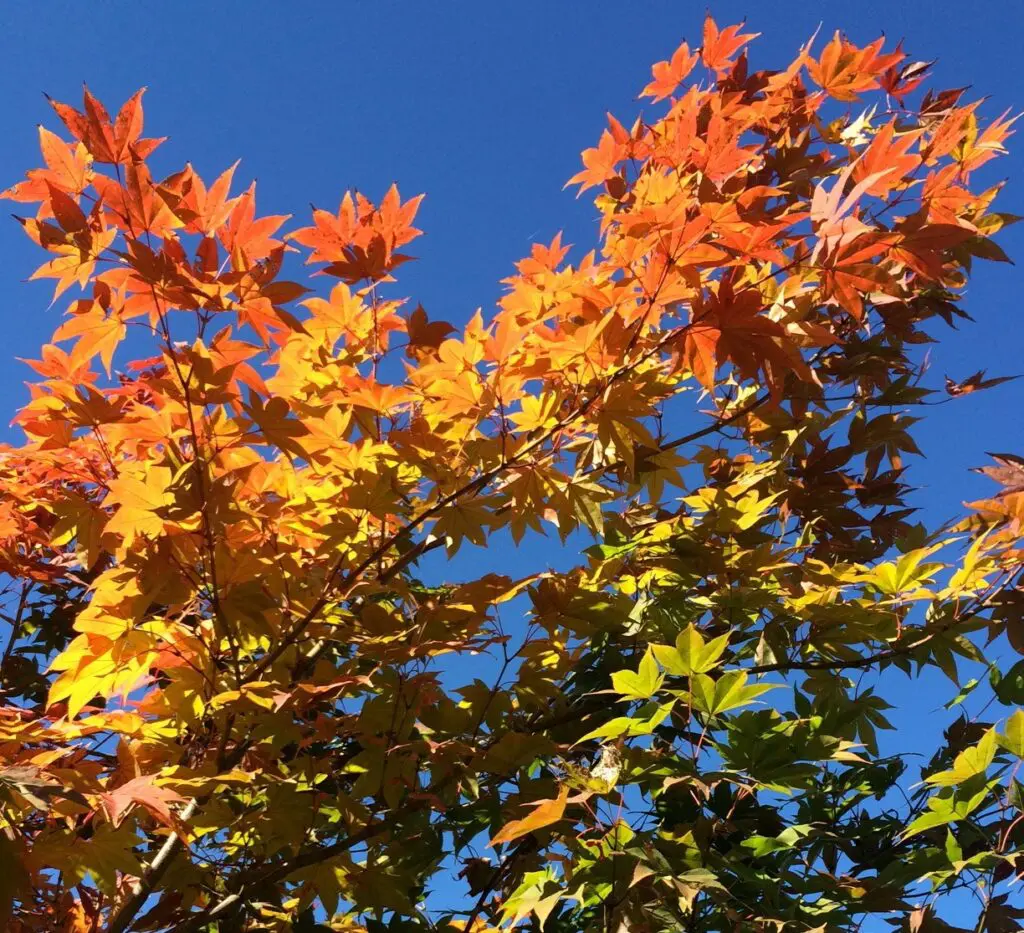
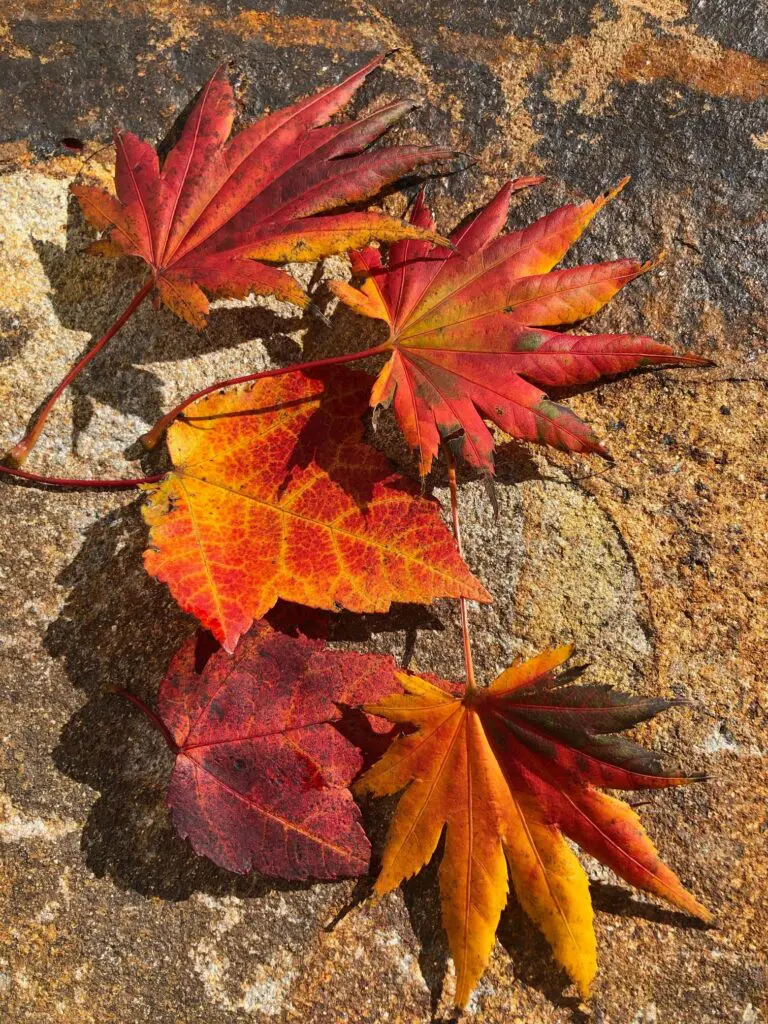
At the top of my list is the ‘Dancing Peacock’ Japanese Maple (Acer japonicum ‘Mai Kujaku’). In summer, the foliage is deep green. As autumn progresses, the green is tinged with scarlet before turning a brilliant golden-yellow with orange and scarlet edges. Eventually, the foliage is fully flame-red from a distance. Among the largest-leaved of Japanese Maple, the ‘Dancing Peacock’ provides abundant color for a long time.
When our children were small, we planted a tree for each of them on our property. Ian’s tree was a ‘Dancing Peacock’. Every day when he was young, he would walk past his tree on his way to catch the school bus. He would be the first one to see the colors creep into the leaves and to let me know I should come out and “look at all the colors!”
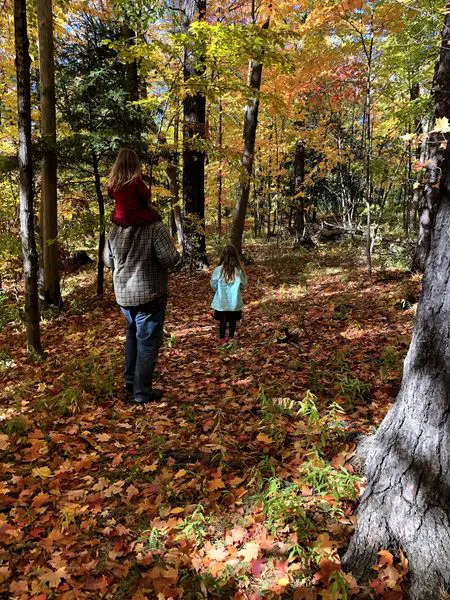
Although the boy is all grown up now, I still carry memories of golden autumn afternoons when he would grab my hand and we would walk down the driveway together to see his ‘Dancing Peacock’ strutting its stuff at the bottom of our garden.
Today, as I celebrate 61 amazing, grace-filled years, the fleeting beauty of autumn leaves, growing grandchildren, the shorter days and the speed with which they pass remind me to slow down and savor each moment and the people who make them significant.
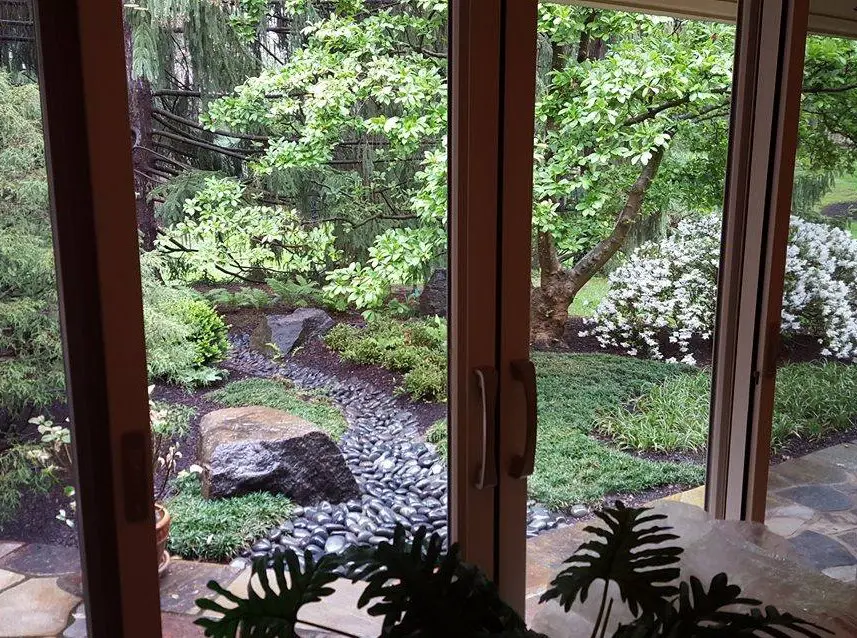
Japanese gardens are designed to provide rest for the soul and the eyes by eliminating loud, competing elements and creating a setting that increases connection to the natural world.
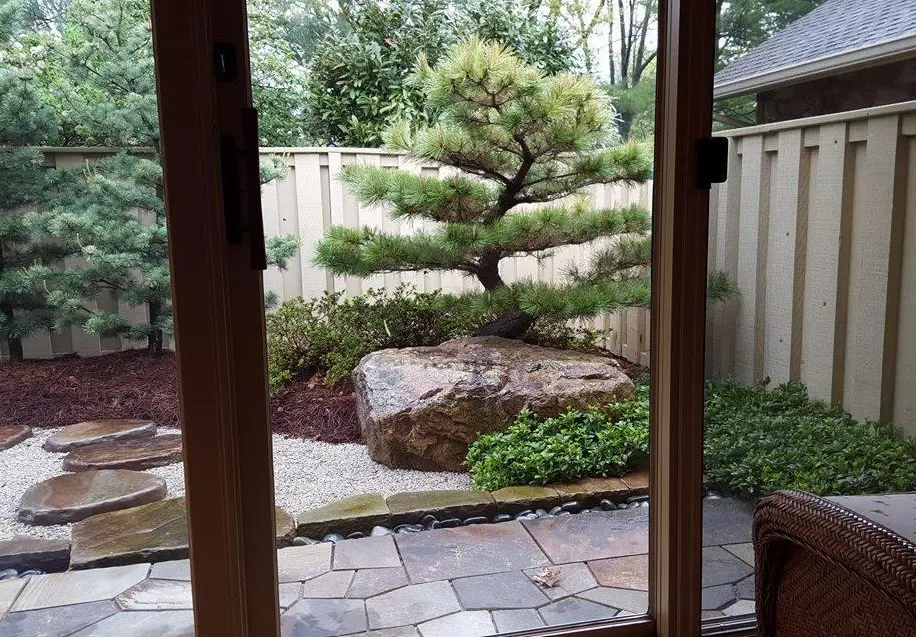
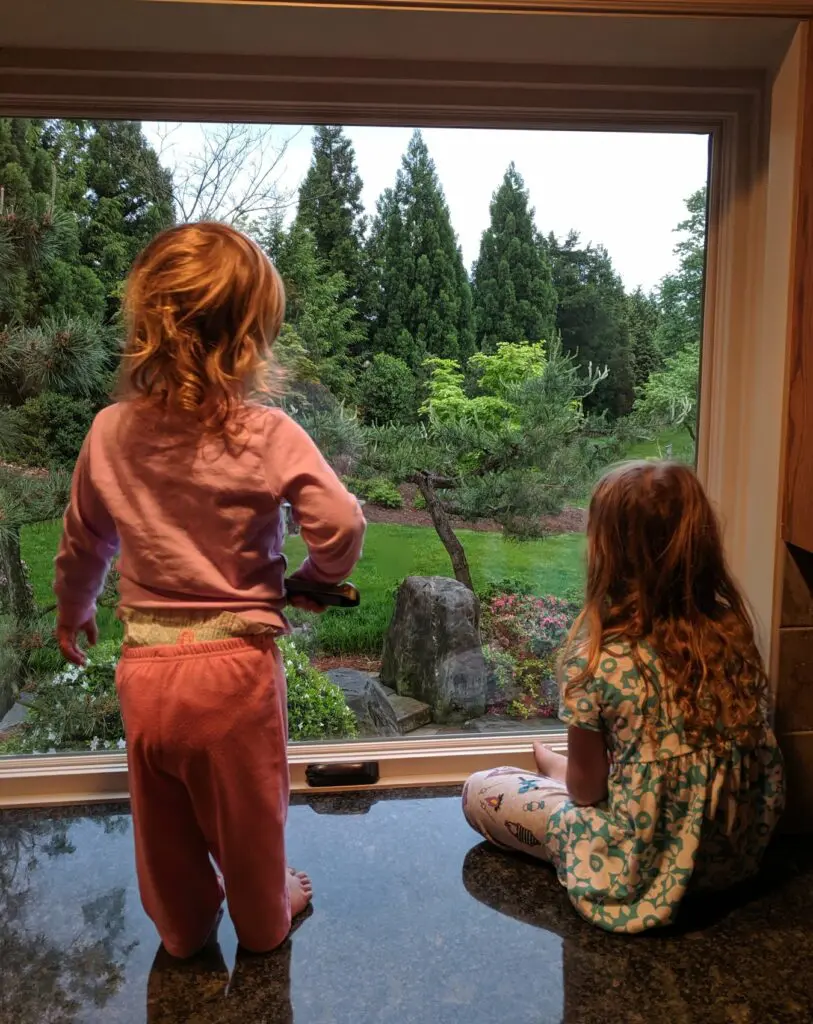
To create a Japanese garden, the designer pays close attention to the existing and proposed physical features that shape the “Ma” (negative space) which defines the character of the garden. The designer also carefully considers human scale, emphasizing “eye-level” perspective. In Japanese residential garden design, this view is commonly planned from a primary vantage point (a favorite chair, for example).
Where possible, designs incorporate opportunities present in the existing landscape, utilizing “Shakkei” (borrowed scenery) to enhance the garden’s unique sense of place.
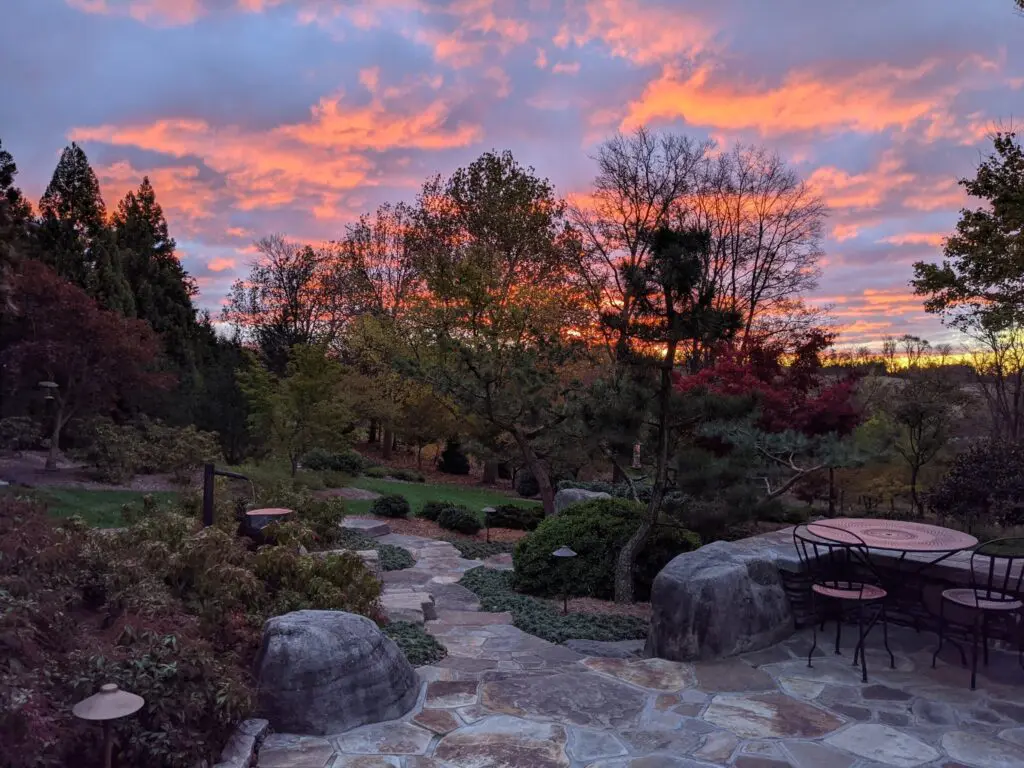
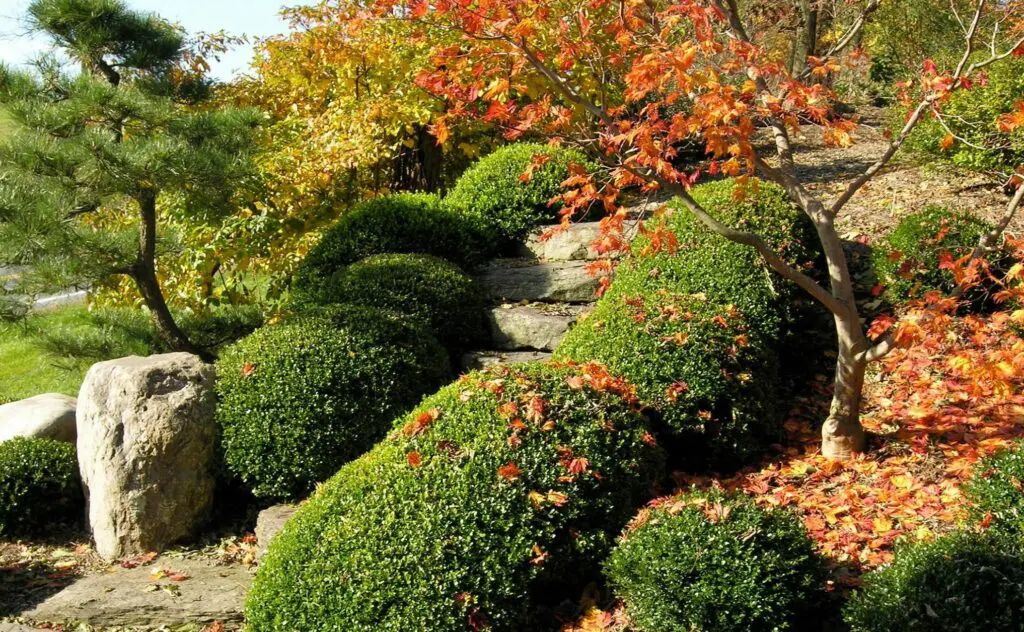
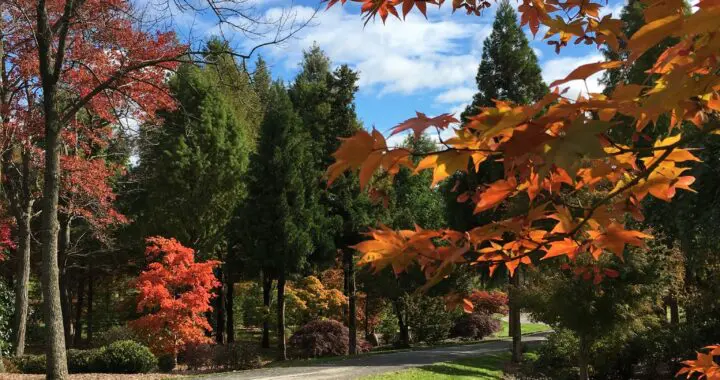
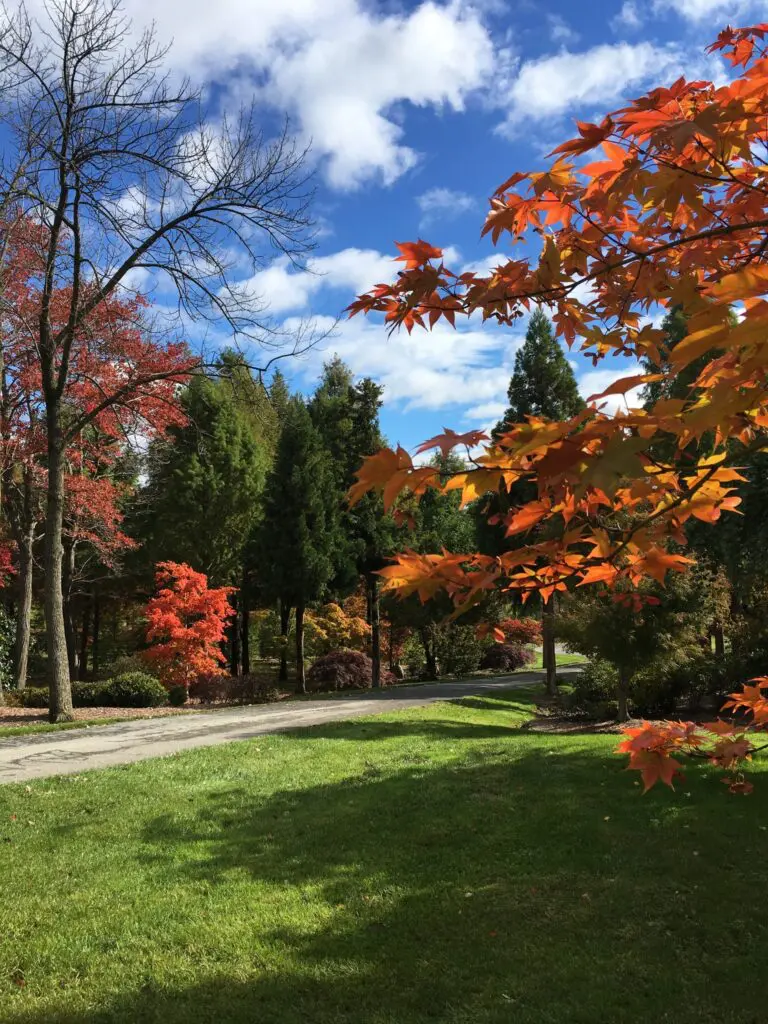
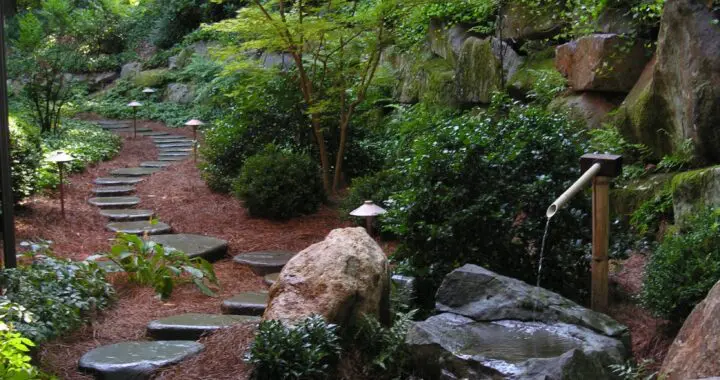
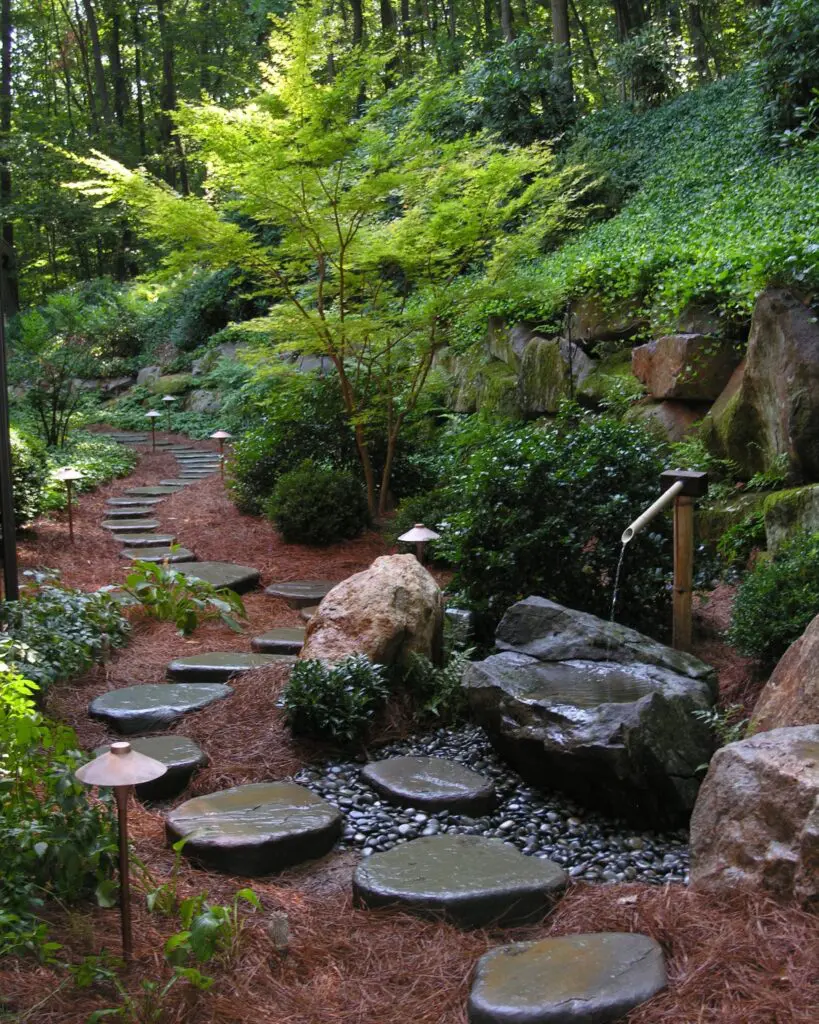
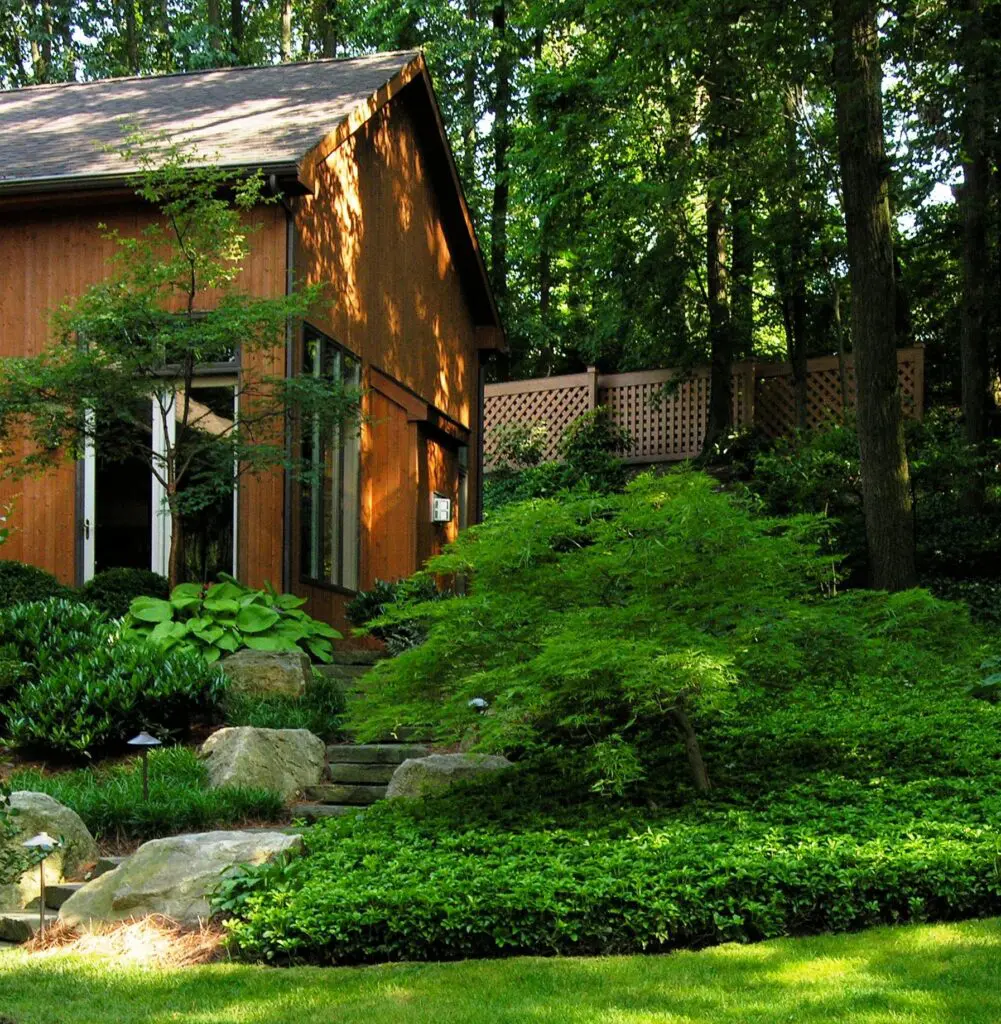
The photos of a Lancaster County, PA, garden (below) display some of the principles and elements often considered when creating Japanese-inspired gardens.
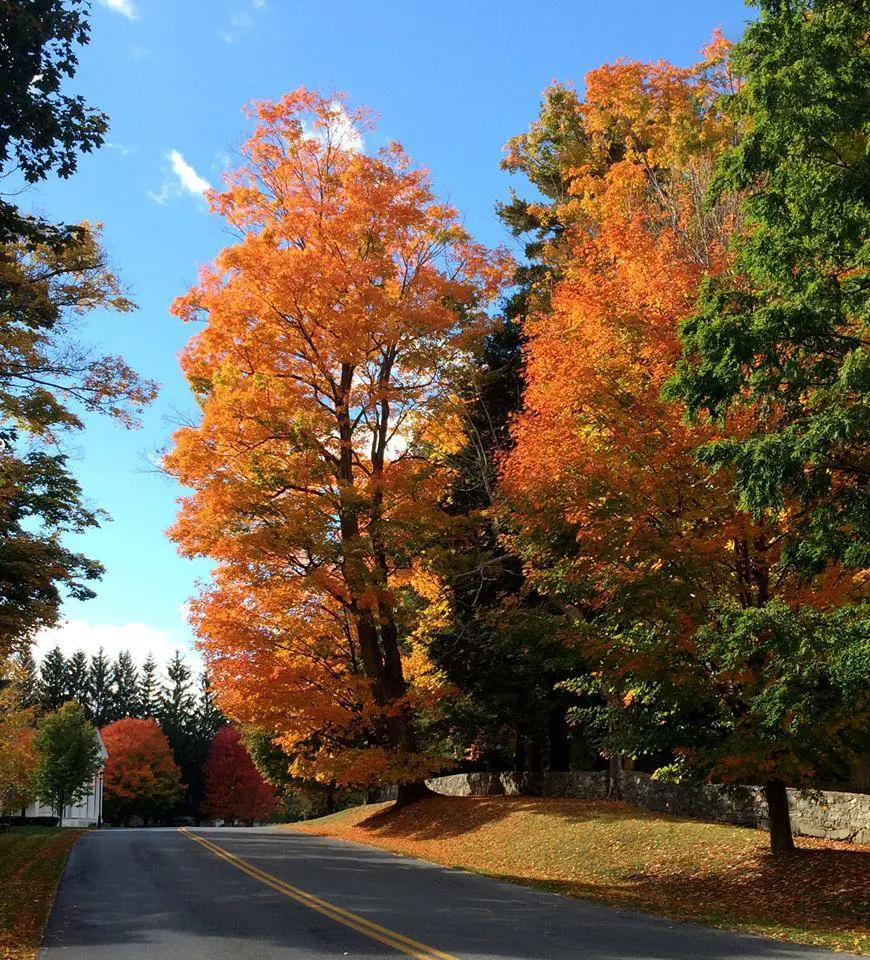
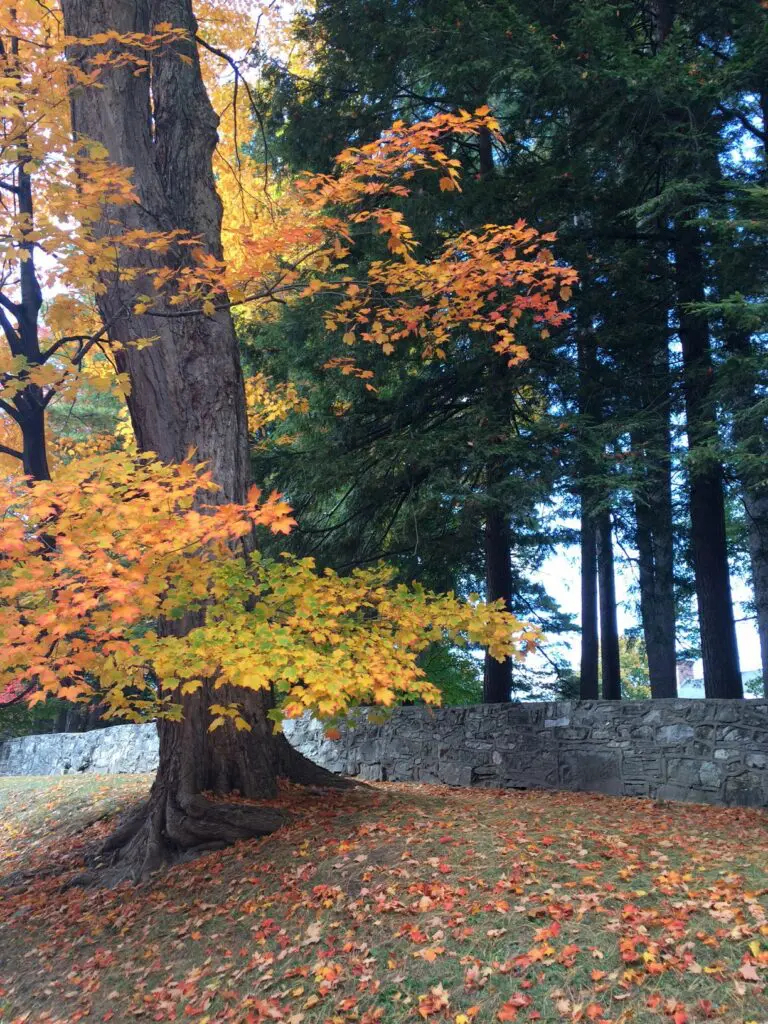
Snow-white clouds scudding across skies of intense blue; Goldenrods dancing in the afternoon sunshine to the tempo of a gentle breeze; fuzzy orange Wooly Bears scuttling across roadways . . . . Nature is hinting that autumn glory is just around the corner. And soon, God will flick His paintbrush and splashes of orange, red, and gold will appear on hillsides, in meadows, in our own gardens. Without a doubt, the radiant splendor of autumn will soon be here and we will be wishing that October lasted five months instead of just one!
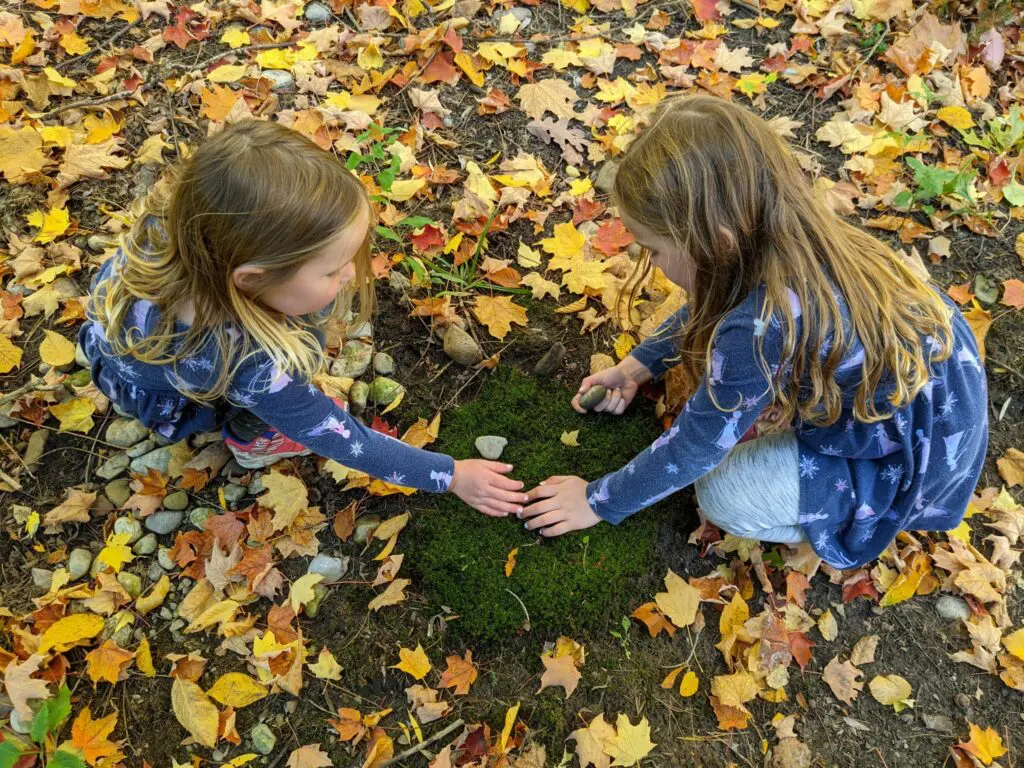
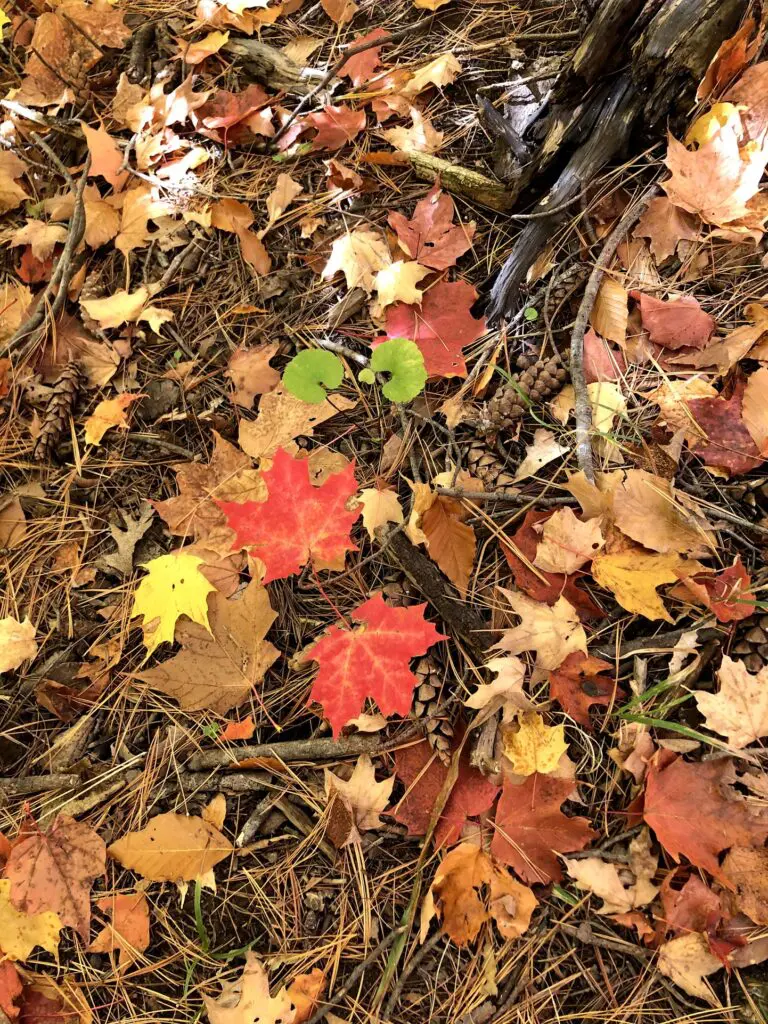
I have an idea for prolonging the colors of autumn for at little longer: This October, when the trees in your garden or a nearby park are flaunting their glorious colors, pack a picnic lunch, rally the kids (or grandkids), and head outside for a leaf-collecting adventure. Bring home the leaves you gather and place them between the pages of the phone books you keep forgetting to recycle. In November, as you set your Thanksgiving table, bring out the leaves and scatter them across your table for a spectacular second showing of autumn’s extravagant colors!